Your chatbot recites the script. The customer steps out of it. You lose them.
WhatsApp is the channel your customer already uses. They don't have to download anything, register, or open the chat on your website — they open it from the same conversation they have with their best friend. That's why a well-built agent on WhatsApp tends to convert better than the same agent on other channels: friction to start is zero.
And yet, most enterprise WhatsApp chatbots we see are a disappointment. They work like this: "Hi, how can I help? Press 1 to book, 2 for hours, 3 to talk to a human." The customer presses 1, hits "How many people?", types "Hi, I'm Marta, wanted to ask if you have a terrace", and the bot answers "Please type a number." The customer closes the chat and goes to a competitor.
The problem isn't WhatsApp. It's that behind the WhatsApp lives a decision tree dressed as a chatbot. When the customer steps out of the script — and they always do — the bot can't bring them back. And because WhatsApp doesn't offer easy second chances (it doesn't open a new tab for you), the lead is lost.
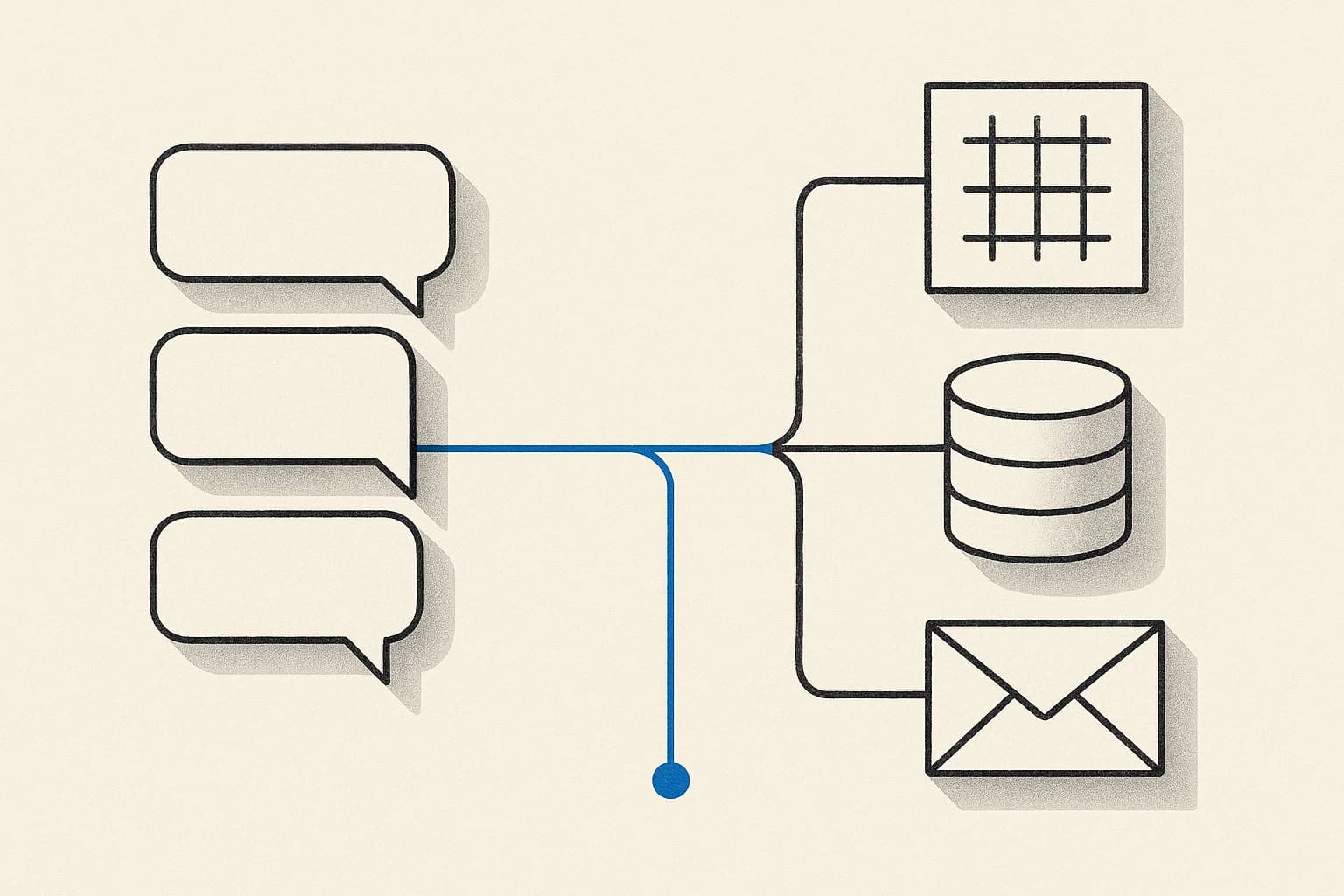
An agentic chatbot does the opposite. It has no script. It has a role, a set of tools over your systems, and the ability to reason about the conversation turn by turn. When Marta asks about the terrace, it checks your reservation system, sees there's a terrace, offers to book, and if she says yes, executes the reservation, confirms, and sends the address. In the same conversation. No number-pressing.
That's the difference between losing WhatsApp leads and closing them.
What an agent does when the customer "steps out of the script"
A well-designed agent operates in three steps, not one:
Step 1 — Interpret. Reads the customer's message in context: what's been said earlier in the conversation, what it knows about the customer if they're already in the CRM, the time of day, the business sector. "Wanted to ask if you have a terrace" isn't ambiguous when the agent knows we're in a restaurant in May and the customer asked two turns ago about a reservation.
Step 2 — Decide. Picks the next action from the available ones: respond, query a system, execute something, escalate to a human, ask for clarification. There's no predetermined flow; there's per-turn reasoning.
Step 3 — Execute and return. If the action is to query the reservation system, it queries and returns with the data. If the action is to create the reservation, it creates it. If the action is to escalate to a human, it escalates. The reply to the customer includes, when applicable, the result of the executed action — not a promise to do it later.
This sounds obvious when stated. The reason few WhatsApp chatbots actually do it is that it requires building it well: real integrations with client systems, not pre-approved templates; per-turn reasoning, not finite states; managing context between turns without losing the thread. It's engineering, not configuration.
Real architecture: what's behind a production WhatsApp agent
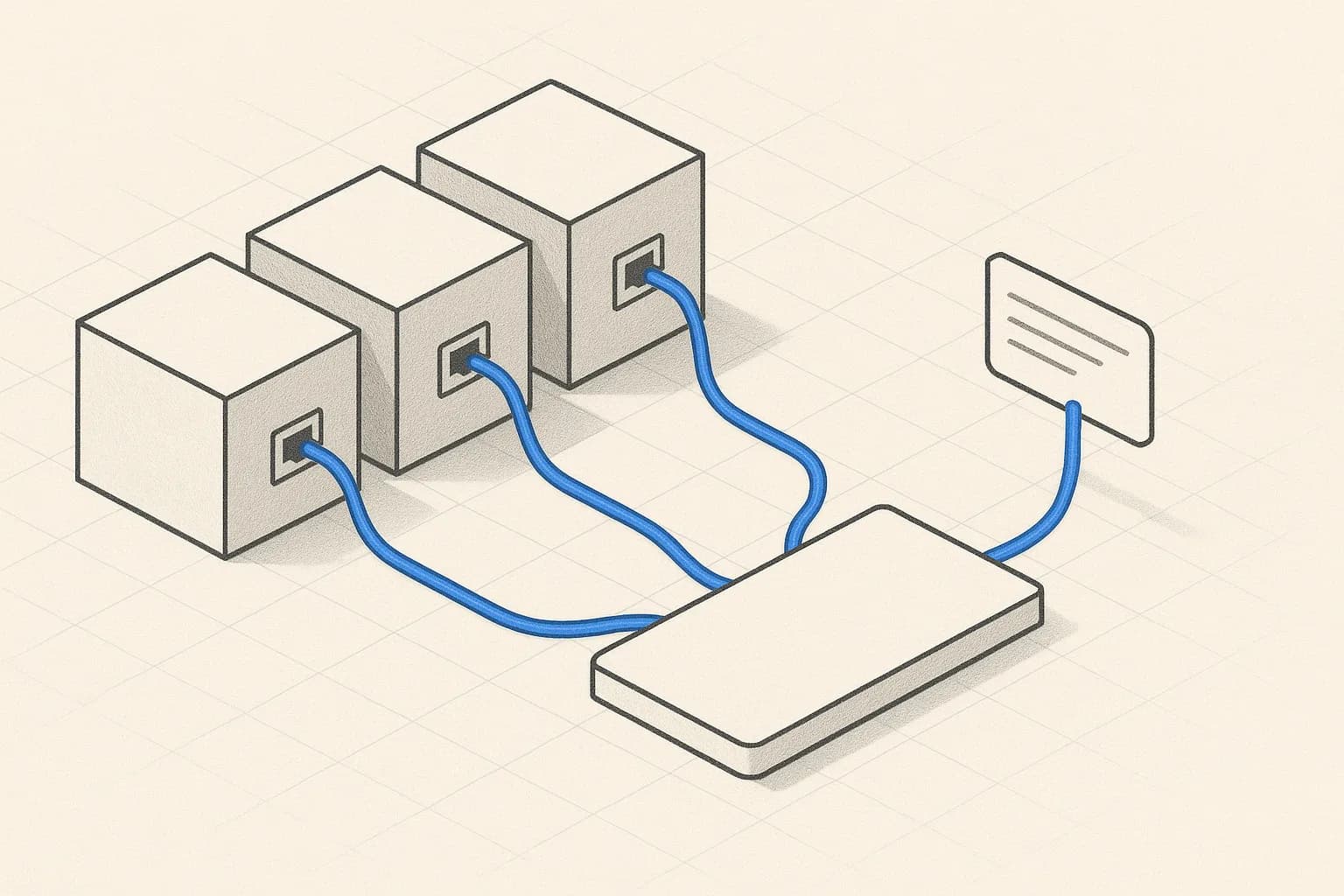
The architecture of a serious WhatsApp agent has five pieces worth understanding before scoping a project.
WhatsApp Business API (not the WhatsApp Business app — the API). It's Meta's official channel for programmatic communication. Requires a verified number, an approved business profile, and, for outbound messages outside the 24-hour window after the customer's last interaction, pre-approved templates.
Receiving webhook. Every message arriving at your WhatsApp number triggers a webhook to your system. That webhook is received by the orchestrator, which decides what to do with the message: route it to the matching agent (if you have several), discard if it's spam, or escalate to a human if the flow requires it.
Agent orchestrator. Where the reasoning lives. Receives the message and the conversation history, decides which tools to invoke, executes those it picks, and returns the response. This is where the agent's context engineering happens: what from the history to pass to the model, which fragments of the business manual, which tools are available at each moment.
Tools over real systems. The actions the agent can execute: query availability in the calendar, create a reservation in OpenTable, log a lead in HubSpot, check the order status in the ERP, send a confirmation email to the customer. Each tool with its contract, its permissions, and its log.
Outbound message manager. Sends the response to the customer via the WhatsApp API. Manages the 24-hour rule (if the last interaction was more than 24h ago, you must use an approved template instead of free text), handles retries when sending fails, and logs delivery.
Five pieces, two classic risks in poorly built projects: webhook bottleneck during traffic spikes (a Friday-afternoon discount) and context loss between turns if the conversation moves between servers without state being passed. Both are prevented with proper architecture from the start, not patches later.
Reservations, qualification, support: three flows that look the same and aren't
One of the most expensive traps in WhatsApp projects: treating every use case with the same pattern. Three common examples and why they're designed differently:
Reservations (hospitality, appointment services). A write-heavy flow: the agent receives flexible input and ends up creating a record in a system. The conversation is relatively short (5-8 typical turns), success is measured by completed reservation, and latency matters a lot — a customer asking about a table for tonight won't wait three minutes.
The challenge: the agent has to handle ambiguous requests ("can we have dinner Friday?"), ask just enough (don't turn the chat into an interrogation), and create the reservation in one try. If the first reservation fails because the slot isn't available, offer alternatives in the same message — don't punt to a menu.
Lead qualification (B2B). A conversational flow, with dozens of possible turns. The agent isn't just creating one record at the end; it's enriching the CRM turn by turn. Latency matters less (it's B2B, the lead accepts a bit more friction), but the quality of extracted context matters a lot: what the agent captures goes to the human salesperson who'll take over.
The challenge: separate what the agent knows (CRM data, lead context, ICP) from what the agent should discover (specific need, urgency, budget). And, above all, escalate to a human at the right moment — not too soon (losing the chance to qualify well) and not too late (frustrating the lead with insufficient answers).
L1 support (retail, SaaS, services). A read-heavy flow: the agent queries more than it writes. The conversation has peaks: lots of simple questions ("where is my order?") and occasional complex cases. Latency is critical because a customer with a problem expects resolution in seconds.
The challenge: managing escalation with judgment. Too much escalation and the agent adds no value. Too little and the customer gets frustrated when the agent insists on an answer that doesn't solve it. Here, confidence thresholds and "this case isn't for me" patterns are the most tunable part of the system.
Packaging all three as "WhatsApp chatbot" and reusing the same agent for all of them usually ends badly. Each flow deserves its own role even if the infrastructure is shared.
HITL on WhatsApp: how to escalate without losing the customer
The most underestimated part of a WhatsApp agent is what happens when the agent decides to escalate. If the customer notices the transition, you've lost half the conversation; if the human has to ask the customer to repeat context, you've lost the other half.
What works in production:
- The human receives the full thread, not just the last turn. The transition is decided by the agent, not by the customer; the customer doesn't even notice except because the voice changes.
- Context loaded: the human opens the conversation and sees a synthetic summary generated by the agent — what the customer asked, what was done, what's pending, what CRM data is relevant. This lets them answer the first message without asking for data the agent already knows.
- The agent stays present. In long or multi-turn conversations, the agent suggests possible replies to the human ("this customer asked this two weeks ago and we answered like this") or post-conversation assistance ("want me to send the confirmation email with the agreed data?"). The human is the operator, not the operative.
- Re-escalation to the agent when the human has resolved the hard part. The agent can pick up for automated follow-up (confirmation, document sending, two-day reminder).
Integration with the human team's WhatsApp is usually done with WhatsApp Business or API-based corporate clients, not the personal app. The history lives in the agent's repository, not on a salesperson's phone.
Metrics: how you know it's working
Four operational metrics we measure systematically:
- % self-resolved without escalation — how many conversations the agent closes alone. In reservations we typically see 75-90%; in B2B qualification, 40-60%; in retail L1 support, 55-70% depending on agent maturity.
- Mean response time — from the customer's message to the response being sent. A good agent: under 3 seconds on simple queries, under 15 seconds when multiple tools must be invoked. Above 30 seconds, the customer drops off.
- Post-conversation CSAT — short survey after closing (without harassment). Comparable against the prior human channel's CSAT.
- Conversion — in commercial flows (reservations, qualification, sales), percentage of conversations ending in the target action. This is where the agent justifies its existence: if it converts worse than the previous web form, there's a problem; if it converts better (and it usually does, because it's available 24/7 and doesn't force the customer to leave the chat), ROI is clear.
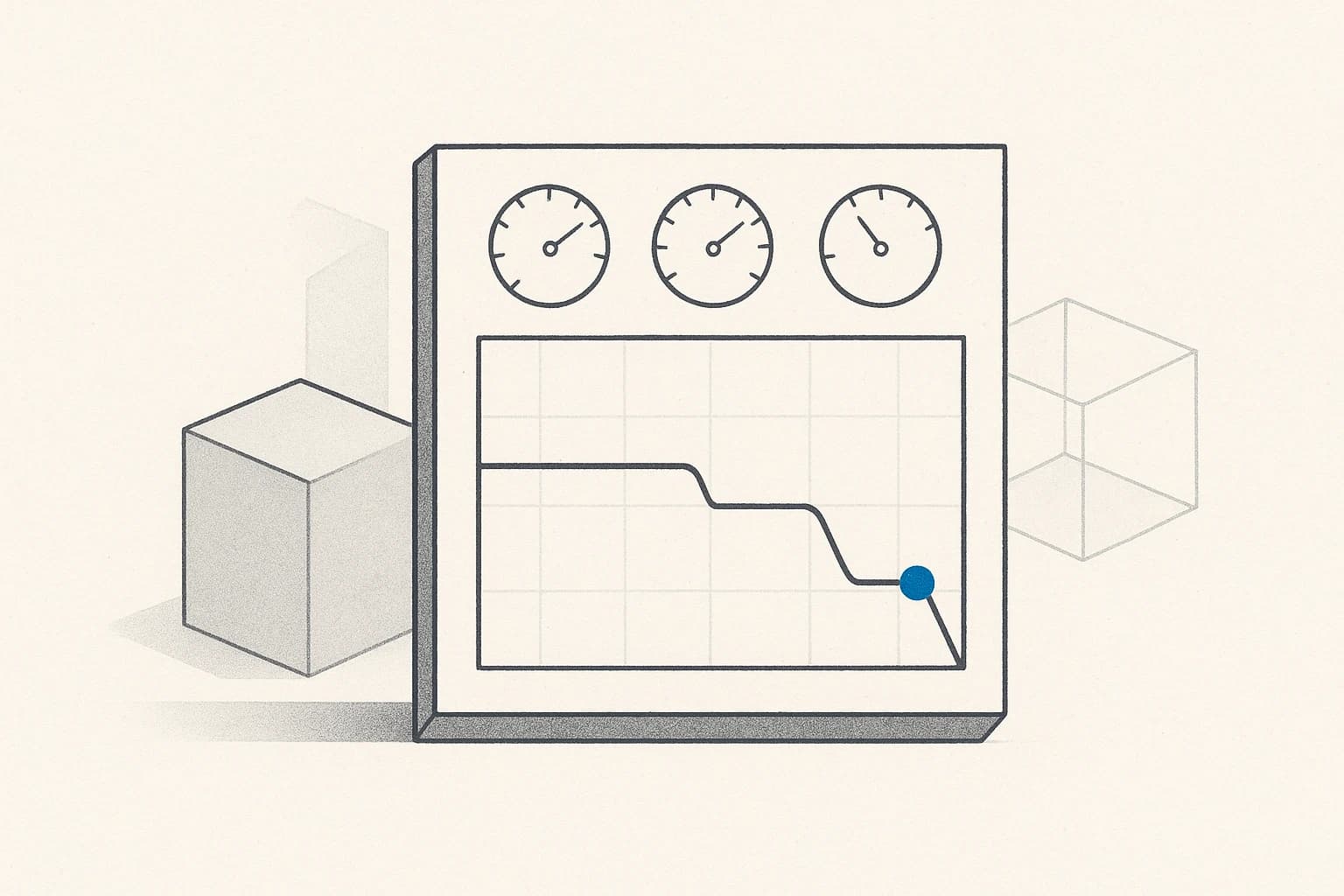
These metrics get reported on a dashboard, not in a monthly PDF. And they're watched with alerts: if the self-resolution rate spikes down, someone has to find out the same day.
Three real cases (anonymized)
Restaurant with multi-room reservations. WhatsApp agent connected to the internal reservation system and the calendar. Handles requests 24/7 in Spanish and English. Confirmed-reservation-without-human-intervention rate: around 85% of incoming requests. Mean response time: 6 seconds. Reservations that used to come by phone (with less staff on weekends) mostly moved to WhatsApp within the first three months.
B2B company with qualification. Agent receiving conversations from WhatsApp after commercial campaigns. Qualifies against the ICP, logs in HubSpot with extracted context, and books a call with a human salesperson when applicable. Qualified conversions / conversations started: around 55%, versus ~22% with the previous web form on the same acquisition channel. Average cost per qualified lead: roughly half the previous one, including LLM and integration costs.
Retail with L1 support. Agent handling order-status questions, returns, size changes, and availability queries. Autonomous resolution: ~64% of conversations, with peaks of 78% on Black Friday when most queries are order status. Agent CSAT: slightly higher than nighttime human support (where there was no prior coverage).
How we build it in production
When a client asks for a serious WhatsApp agent, the first deliverable is the map: which use cases belong on this channel (not all of them deserve it), which tools over which systems the agent needs, which escalation thresholds apply, and which metrics will decide whether it's working. Building the agent comes after the map, not before.
The WhatsApp number gets verified and registered to the client, not us. Templates for outbound get approved against their account. Conversation history, agent logs, and metrics live on the client's infrastructure. If six months in they decide to change partners, the number, the conversations, and the agent keep working — there's no black box that shuts off the day we leave.
Behind each WhatsApp agent is a team of engineers who believe serious chatbot engineering starts with understanding when the customer steps out of the script — not with showing pretty templates. Technical excellence isn't measured by the number of preconfigured flows; it's measured because the customer asking things the team didn't anticipate is still a customer at the end of the conversation.
Production means the agent picks up leads, books reservations, and resolves queries on a Saturday night — not that the Monday demo impressed the committee. That's the difference between a real WhatsApp agent and a chatbot on steroids.
If you have a WhatsApp chatbot losing leads when the customer goes off-script — or you're evaluating bringing agents to this channel and you're not clear on which use cases to prioritize — we can audit your current flow and hand you the plan so the next customer who opens your WhatsApp gets closed by you, not by the competitor.