Digital Worker, chatbot, and RPA aren't the same thing
The term Digital Worker is being used for three different things and only one is correct. Worth clearing up before going further, because the distinction decides what to expect from the system.
A chatbot answers. Receives a question, returns an answer, walks away. Even with AI behind it, it stays conversational: the output is text, not action. When the user wants something more than information, a human has to step in.
An RPA (Robotic Process Automation) executes. It follows a deterministic script that copies, pastes, clicks, and fills forms in a fixed sequence. It works perfectly until the day a button moves or a new pop-up appears, and then it breaks. RPA doesn't reason; it follows a recipe.
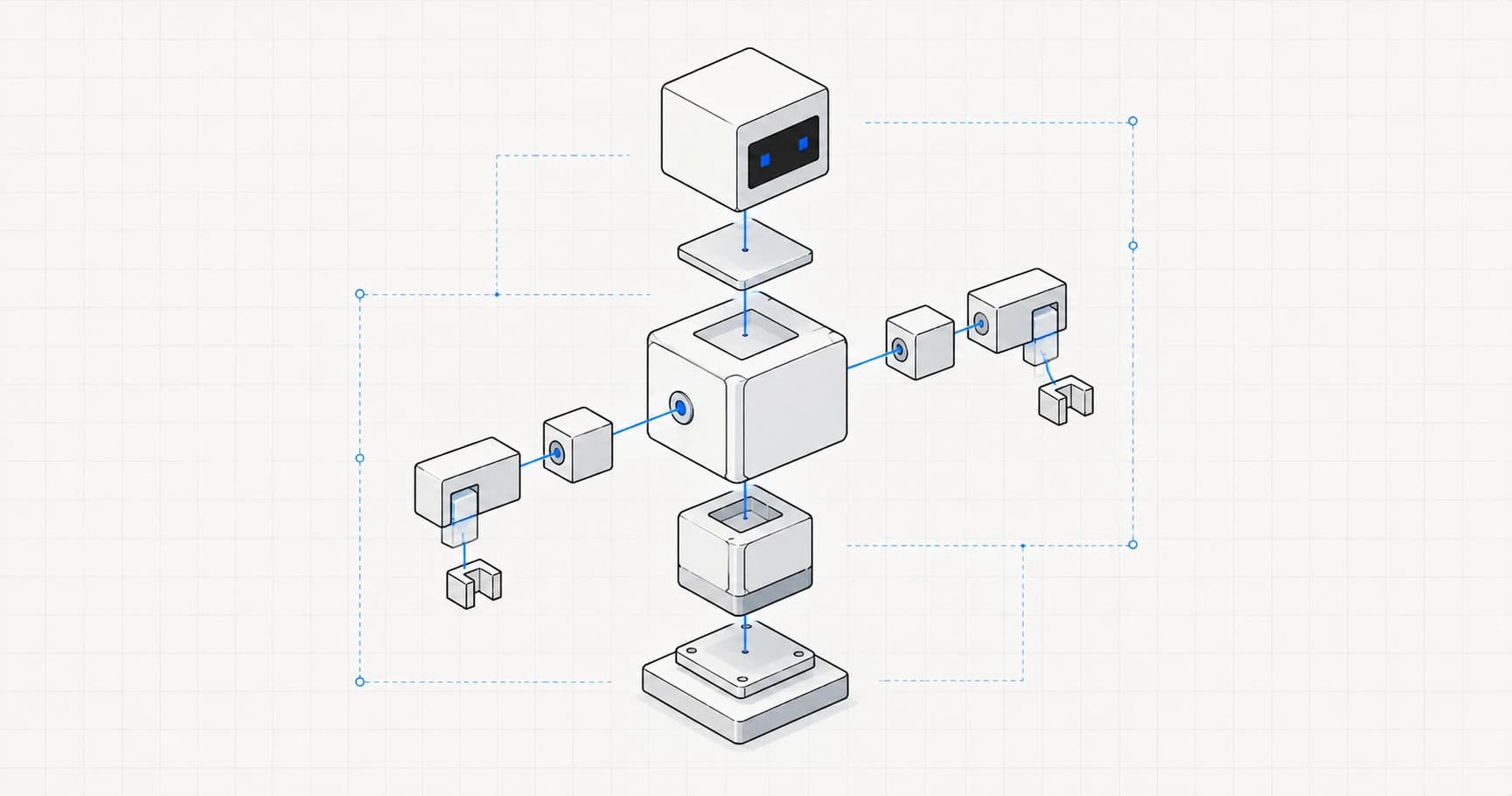
A Digital Worker takes on a responsibility. It has a bounded role, tools assigned to act on real systems, thresholds defining when it decides alone and when it escalates to a human, and metrics that say whether it's doing the job. It reasons like an LLM, executes like an RPA, but adapts when reality changes. It's the closest thing today to a digital employee.
This article takes apart that last category — the only one that deserves the name — and looks piece by piece at what makes it work in production.
The role: the most important contract
The first trap of Digital Worker projects is the temptation to make them too general. "Have it handle everything customer-service related" sounds great in a meeting and produces a mediocre system in production.
A Digital Worker works when its role is bounded with the same precision as that of a well-defined employee. Three questions we answer at the start of every project:
- What specific tasks does it do? Not "handle customers", but "qualify incoming leads from the web form against the client's ICP and create the lead in HubSpot with the qualification documented".
- What does it not do? Not "everything else". An explicit list: "doesn't close opportunities, doesn't send commercial proposals, doesn't negotiate prices". Anything not in the task list goes to a human.
- What's the success criterion for the role? Not "user satisfaction". An operational metric: "% of leads correctly qualified, validated against a weekly review of 30 random samples".
This bounding doesn't limit the agent — it makes it reliable. An agent with a broad, vague role is an experiment; an agent with a narrow, clear role is a job position. Companies that get the most out of Digital Workers have three or four highly specialized agents, not one single "do-it-all" agent.
Tools: powers, not features
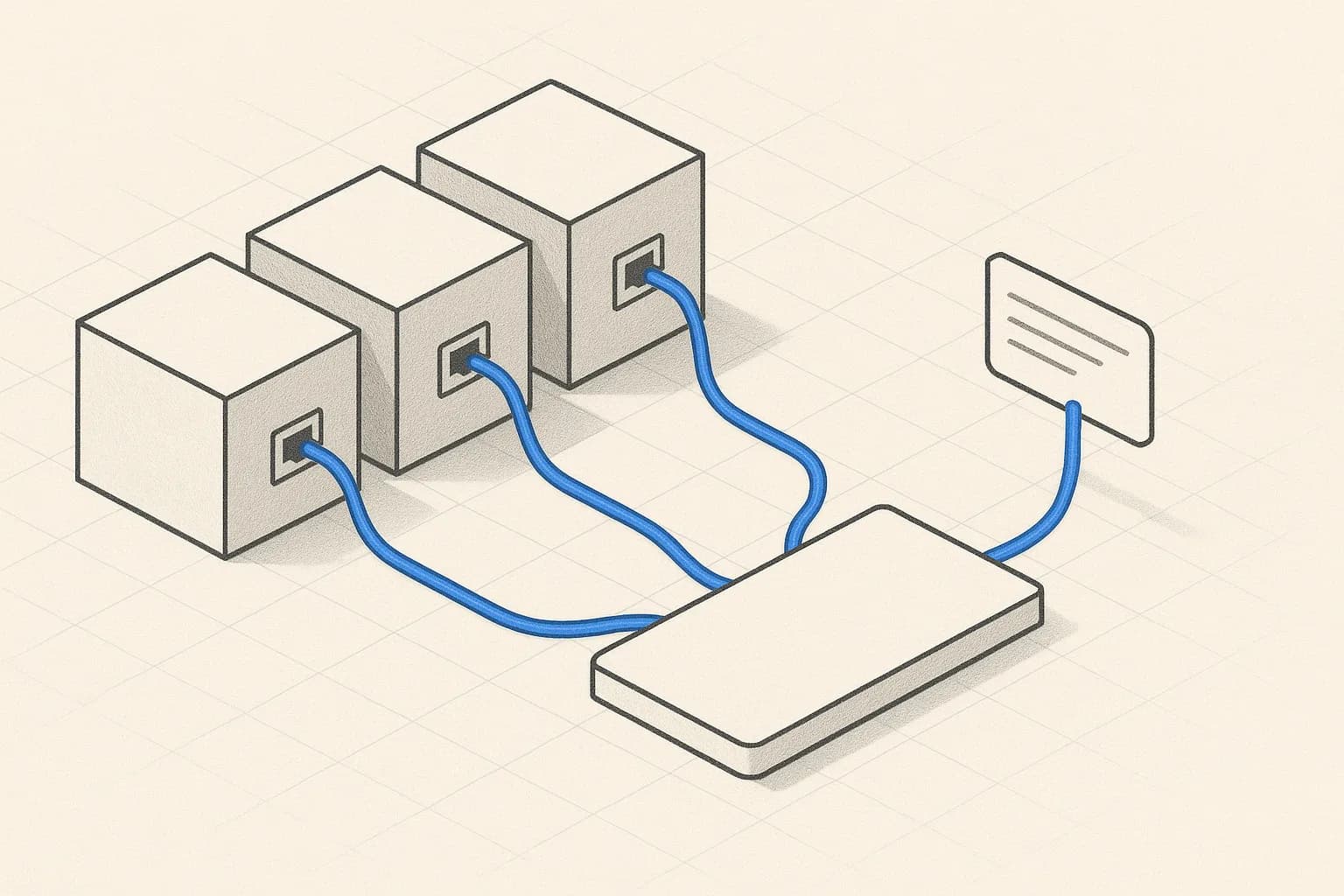
Tools are what separate an agent from a smart chatbot. A tool isn't a function — it's a power granted to the agent to act on the real world.
Each Digital Worker has a bounded, explicit list of tools, with a contract for each one:
- Name and description readable by the model, which the agent consults when deciding which to use.
- Accepted parameters with types and ranges. An "update deal" tool receives
deal_idandnew_status, nothing else. - Scope of action. A commercial agent has no access to financial tools. A support agent has no access to mass-delete tools.
- Reversibility. Each tool is marked reversible or irreversible, which conditions whether it needs human approval before execution.
The industry standard for building these tools and connecting them to the agent is MCP (Model Context Protocol), which defines how the agent discovers available tools, their contracts, and their responses. For systems with native MCP support (more and more SaaS tools offer it), connection cost is low. For proprietary systems — bespoke ERPs, internal tools — a custom MCP server is built that exposes only the allowed actions, with validation on top.
An operational rule we apply: read tools are cheap and granted with no friction; write tools are granted with care and validation; delete tools or external-communication tools always require review and are rarely granted without HITL.
Decision thresholds: neither "always alone" nor "always ask"
The decision on how much autonomy to give a Digital Worker is where projects fail. The two extremes don't work: if it always asks, it adds no speed; if it always decides, it scares the team and produces expensive errors.
What does work is defining thresholds by action class:
- Read — always autonomous. Querying the CRM, reading a document, checking a calendar. Never requires approval.
- Reversible low-impact write — autonomous, with log. Drafting an email, scheduling an internal meeting, tagging a ticket. The human finds out, but doesn't pre-approve.
- Reversible high-impact write — autonomous up to a threshold. A SDR agent can send qualification emails to leads, but above a certain potential amount or customer profile, it waits for human approval.
- Irreversible write or external communication — always with approval. Closing a deal, sending a signed proposal, deleting records, announcing something publicly. The human validates with full context in front of them.
These thresholds aren't rigid. They're tuned with data: if after two months the agent gets 98% of qualifications above the current threshold right, the threshold goes up. If it starts failing, it comes down. A Digital Worker that starts conservative and gains autonomy with evidence is a pattern that doesn't fail; one that starts with full autonomy and gets clipped back produces incidents before learning the lesson.
Metrics: what separates product from promise
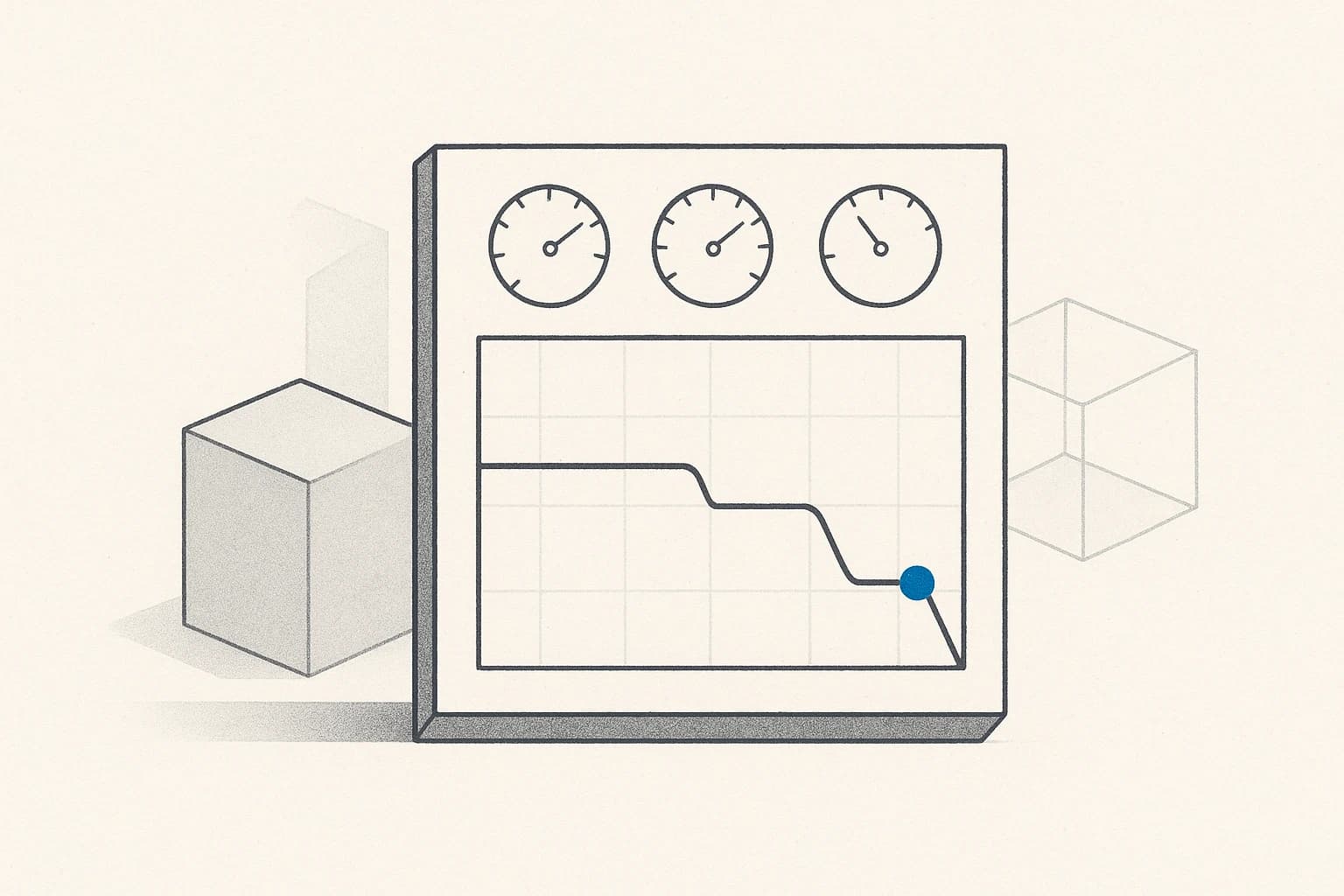
A Digital Worker without operational metrics is marketing, not product. The metrics that matter in production aren't the model's (perplexity, BLEU, etc.) but the role's:
- Completion rate — percentage of tasks finished end to end by the agent without escalation.
- Escalation rate — percentage of tasks ending in a human. Knowing why they escalate is half the work: if they escalate on legitimate cases (rare exceptions), the agent is fine; if they escalate from systematic incapability, the role or the tools need iteration.
- Quality of actions taken — periodic sampling reviewed by humans. For a digital SDR: was the qualification right? For an L1 support: did the solution resolve the incident? Without this, the other metrics lie.
- Cost per task — including model tokens, calls to external APIs, and human review time. This is what allows comparison with the previous cost of the process.
- Mean cycle time — from input to output, compared against the previous manual process.
- Uptime — percentage of operational time. If the Digital Worker is down four hours a day, it isn't a worker, it's an intern.
These metrics are reported in a dashboard the operations lead has access to, not in a monthly PDF. And they're monitored with alerts: if the escalation rate spikes 30%, someone has to find out the same day.
Lifecycle: from pilot to retirement
A Digital Worker isn't delivered. It's operated. It has a lifecycle that's planned from day one:
Pilot. The agent starts with reduced scope — one team, one customer segment, limited hours — and demanding metrics. Two to four weeks with close supervision. The goal isn't "100% functioning"; it's to identify the case classes where it works and where it doesn't.
Scale-up. Over the case classes where the pilot proved compliance, the agent takes on more volume. Case classes where the pilot didn't work get documented and stay with humans until the agent is improved — or it's accepted that that piece isn't a candidate for automation.
Operation. Normal regime. The agent works, metrics are tracked, the skills it graduates (crystallized learnings about how to solve new cases) get versioned in the agent's repo and reviewed periodically.
Iteration. The agent's role adjusts with data. Tools are added when new needs are identified, retired when they don't help, HITL thresholds are tuned. This never ends — a well-operated Digital Worker looks more like a service than a project.
Retirement or replacement. A moment comes when the business changes and the Digital Worker's role no longer makes sense, or a more capable version appears that justifies a rewrite. In either case, the agent's repo — its graduated skills, its decision history, its operational documentation — is the client's asset. The next agent starts with all that learning, not from zero.
Three real Digital Workers (anonymized)
Three examples of projects in operation, with anonymized metrics to protect client details.
Digital SDR. Qualifies inbound leads from web forms against the client's ICP, enriches with public data, creates the lead in HubSpot with documented qualification, and books a call with the human salesperson when applicable. Correct qualification rate validated weekly: ~94%. Cost per qualified lead: about a third of the cost of the human SDR previously doing that task. Uncovered cases (leads in very specific sectors): automatic escalation to the commercial team.
L1 Support. Handles inbound support tickets for a B2B SaaS tool. Diagnoses the type of incident, searches the knowledge base, applies known fixes (credential resets, token regeneration, minor config changes), creates the ticket in Jira, and escalates when the case exceeds L1. Autonomous resolution rate: 62% of inbound tickets. CSAT measured on tickets resolved by the agent: 4.5/5, slightly higher than the previous human L1's CSAT during overnight hours (where there was no human coverage).
Document processor. Receives invoices and delivery notes from suppliers in any format (PDF, image, XML), extracts relevant data, validates against existing purchase orders in the ERP, flags discrepancies for human review, and books those that pass validation. Correct extraction rate: ~97% on known formats, ~85% on new formats. Monthly volume processed without human intervention: around 80% of total. The ones requiring review land in a human operator's queue with the discrepancy already flagged and the context loaded.
What's common to all three: a bounded role, a closed tool list, clear thresholds for escalation, operational metrics on a dashboard, and a human team that supervises, tunes thresholds, and reviews the sampling. They aren't demos. They're job positions covered by software.
How we build it in production
When we step into a Digital Worker project, the first deliverable isn't the agent. It's the role map: what it does, what it doesn't do, what tools it needs, what HITL thresholds apply, what metrics will decide if it's working. On top of that map we set up the architecture — the agent orchestrator, the MCP servers to the client's systems, the metrics dashboard, the human-review system for escalations.
The Digital Worker's repository belongs to the client from the first commit. Tools, prompts, graduated skills, and operational documentation live there, versioned. If in six months the client decides to internalize maintenance or change partners, they have everything needed to do so without dependency.
Behind each Digital Worker is a team of engineers who believe serious AI engineering starts by understanding what a person does during the day and what part of that is reasonable to automate — not by showing what a model "can do". The difference between a project that holds up and one that dies at six months isn't set by the model or the framework, it's set by how well the role has been defined and how well the thresholds have been designed.
Production means the Digital Worker is covering a Monday morning shift, not that the demo wowed the committee. That's the difference between a digital worker and a well-presented experiment.
If you're evaluating where to put a Digital Worker in your operation, or if you have one in pilot that can't quite make it to production, we can audit the role, the tools, and the thresholds and hand you the plan to get the agent covering its shift for real.